MEDIA ROOM

Disaster Unemployment Assistance Now Available

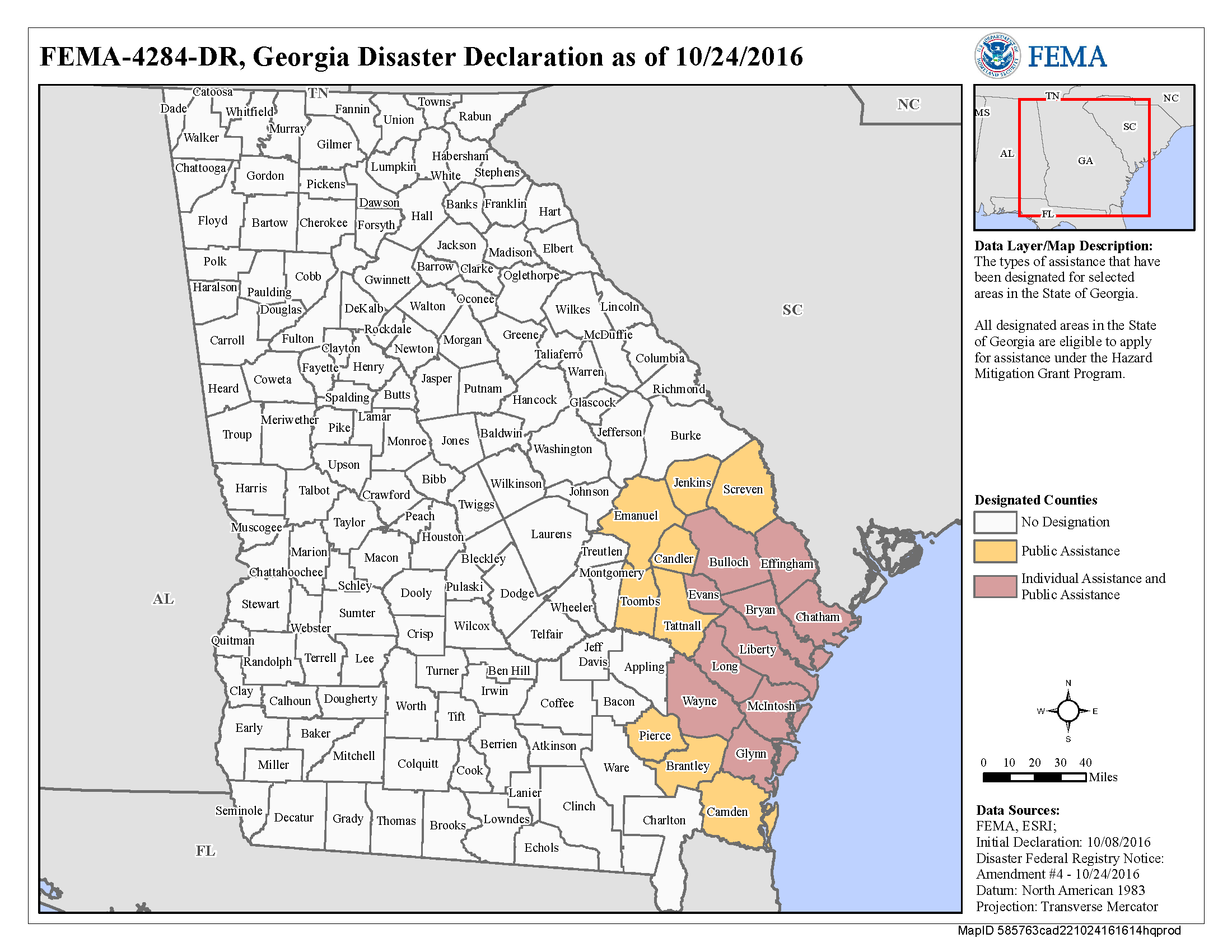
PRESS RELEASE // SAVANNAH, GA – Disaster unemployment assistance is available to workers in Bryan, Bulloch, Chatham, Effingham, Evans, Glynn, Liberty, Long, McIntosh and Wayne counties who lost income as a direct result of Hurricane Matthew in Georgia.

The purpose of disaster unemployment assistance is to help workers whose primary incomes are lost or interrupted by a federally declared disaster. It differs from regular state unemployment insurance because it provides benefits to people who are self-employed, farmers, loggers and employees who work on commission.

Individuals in the 10 counties approved for disaster assistance in Georgia must first apply for regular unemployment insurance by visiting the Georgia Department of Labor website at dol.georgia.gov or apply in person at any Georgia Department of Labor career center. For locations, visit dol.georgia.gov/locations/career-center.

The Georgia Department of Labor will notify claimants if they are also eligible to file for disaster unemployment assistance.

Eligible claimants in Bryan, Bulloch, Chatham, Effingham, Glynn, McIntosh and Wayne counties must apply for disaster unemployment assistance by Friday, Nov. 18. Applicants in Evans, Liberty and Long counties must apply no later than Monday, Nov. 28.

For more information on applying for disaster unemployment assistance visit the Georgia Department of Labor website

MEDIA ROOM

Free Legal Services for Eligible Hurricane Survivors

PRESS RELEASE // SAVANNAH, GA – Free legal assistance is now available to low-income Georgia disaster survivors who need help with home repair contracts and contractors, counseling on landlord-tenant issues or assistance with life, medical and property insurance claims.

Disaster often brings chaos, which can result in disagreements. Legal help is available to survivors in Bryan, Bulloch, Chatham, Effingham, Evans, Glynn, Liberty, Long, McIntosh and Wayne who can’t afford to hire a lawyer to deal with disaster-related issues. Damage must have occurred from Oct. 4-15.

Legal assistance can include:

  • Help securing FEMA and other government benefits available to disaster survivors
  • Replacement of wills and other important legal documents lost or destroyed in the disaster
  • Assistance with consumer protection issues such as price gouging and avoiding contractor scams in the rebuilding process
  • Counseling on mortgage-foreclosure problems

The toll-free legal hotline to connect disaster survivors affected by Hurricane Matthew with legal aid providers is 866-584-8027. Local residents may call 404-527-8793. The lines are open Monday to Friday, 9 a.m. to 5 p.m.

Individuals who qualify for assistance will be matched with Georgia lawyers who have volunteered to provide free, limited legal help. Assistance is not available for cases that will produce a fee; for example, those cases in which attorneys are paid part of the settlement by a court. Such cases are referred to a local lawyer referral service.

Consultations with attorneys are confidential.

Legal services are provided by FEMA partners, including the State Bar of Georgia Young Lawyers Division, the American Bar Association Young Lawyers Division, Georgia Legal Services Program and Atlanta Legal Aid Society.

MEDIA ROOM

Jill Griffin (BOC) Recognized for Educational Achievement

PRESS RELEASE // ATLANTA, GA – ACCG, Georgia’s County Association, recently awarded county officials with certificates for completing requirements in the Lifelong Learning Academy. Recipients were presented with their achievement certificates during the 2016 Legislative Leadership Conference at the Jekyll Island Convention Center in Glynn County. At this event, Jill Griffin, Evans County Board of Commissioners Vice-Chairman was honored for successfully completing core requirements in the Lifelong Learning Academy.

The Lifelong Learning Academy has been essential in providing an opportunity for county officials to enhance their knowledge in various areas while providing practical lessons that are applicable to situations in their respective counties.

“The Lifelong Learning Academy has been a valuable resource in my role as a county commissioner,” said Griffin. “Aside from the educational aspect, I am able to gain an alternative perspective from peers who have experienced similar county problems.”

For over two decades, ACCG and the Carl Vinson Institute of Government at the University of Georgia have worked in concert to provide supplemental training and educational tools for county officials. Members work to complete core requirements and can then choose from the abundant course options in a number of specialty tracks, such as intergovernmental relations and disaster and emergency preparedness.

“We offer an array of classes that support our members and prepare them for pressing county matters,” said Ross King, ACCG’s Executive Director. “County officials face unrelenting pressure to make decisions on issues they’ve often never encountered, making our sessions a viable component to their day-to-day operations. This program is a great example of the provision we offer counties to meet the needs of their citizens.”

MEDIA ROOM

Evans County Declared for Individual Assistance Funding

PRESS RELEASE // ATLANTA, GA – Homeowners, renters and business owners in Evans, Liberty and Long counties may apply for federal disaster assistance for Hurricane Matthew damage and losses in Georgia.  In addition to the three counties now eligible to apply for assistance under FEMA’s Individual Assistance Program, seven counties had already received approval to apply for assistance, including Bryan, Bulloch, Chatham, Effingham, Glynn, McIntosh and Wayne.

individual-assistance-map

Damage and losses from the hurricane and flooding must have occurred Oct. 4-15.

Survivors are encouraged to register with FEMA the following ways:

  • Online at DisasterAssistance.gov
  • Download the FEMA mobile app
  • Call the FEMA Helpline at 800-621-3362 (FEMA). Persons who are deaf, hard of hearing or have a speech disability and use a TTY may call 800-462-7585. Toll-free numbers are open daily from 7 a.m. to 11 p.m.

People with disabilities are eligible to receive the same services and assistance offered to everyone in the declared disaster area, and FEMA is committed to ensuring those services are available.

Survivors requiring a reasonable accommodation (American Sign Language interpreting, braille, assistive technology equipment, etc.) may call the appropriate helpline number for support. Help is available in most languages, and information on the registration process is available in ASL at http://www.fema.gov/media-library/assets/videos/111546.

FEMA grants do not have to be repaid. FEMA assistance is nontaxable and will not affect eligibility for Social Security, Medicaid or other federal benefits.

Survivors should contact their insurance company to file an insurance claim and register with FEMA even if they have insurance. FEMA cannot duplicate insurance payments, but underinsured applicants may receive help from FEMA after their claims have been settled.

For updates on Georgia’s Hurricane Matthew response and recovery, follow @GeorgiaEMA and @FEMARegion4 on Twitter and visit gemhsa.ga.gov and fema.gov/disaster/4284.

FEMA’s mission is to support our citizens and first responders to ensure that as a nation we work together to build, sustain, and improve our capability to prepare for, protect against, respond to, recover from, and mitigate all hazards.

Disaster recovery assistance is available without regard to race, color, religion, nationality, sex, age, disability, English proficiency or economic status. If you or someone you know has been discriminated against, call FEMA toll-free at 800-621-FEMA (3362). For TTY call 800-462-7585.

FEMA’s temporary housing assistance and grants for public transportation expenses, medical and dental expenses, and funeral and burial expenses do not require individuals to apply for an SBA loan. However, applicants who receive SBA loan applications must submit them to SBA loan officers to be eligible for assistance that covers personal property, vehicle repair or replacement, and moving and storage expenses.


MEDIA ROOM

Evans County Declared for Public Assistance Funding

PRESS RELEASE // ATLANTA, GA – Nine more Georgia counties are now eligible to apply for FEMA’s Public Assistance funding to supplement state and local recovery efforts in areas that sustained damage from Hurricane Matthew.

Brantley, Candler, Emanuel, Evans, Jenkins, Long, Pierce, Tattnall and Toombs counties may request funding under the Public Assistance grant program. Assistance would cover eligible debris removal, emergency protective measures, and the repair or rebuilding of public facilities such as roads, bridges, water control facilities, buildings, equipment, public utilities, parks and recreational facilities.

The president’s Oct. 8 major disaster declaration for Georgia was for Matthew damage that occurred Oct. 4-15. The declaration was amended to make Public Assistance funding available to state and eligible local governments and certain private nonprofit organizations on a cost-sharing basis for all seven categories including emergency work, restoration of infrastructure and direct federal assistance.

The 10 counties previously approved for Public Assistance funding—Bryan, Bulloch, Camden, Chatham, Effingham, Glynn, Liberty, McIntosh, Screven and Wayne—are now included in the amended declaration and can apply for funding to repair and rebuild public facilities.

Public Assistance funding for the state and designated counties may include payment of not less than 75 percent of the eligible costs for debris removal and emergency protective measures taken to save lives and protect property and public health as a result of the storm.

Application procedures for state and local governments will be explained at a series of state/federal applicant briefings to be announced in the affected area. Approved projects are paid through the state from funding provided by FEMA.

For updates on Georgia’s Hurricane Matthew response and recovery, follow @GeorgiaEMA and @FEMARegion4 on Twitter and visit gemhsa.ga.gov and fema.gov/disaster/4284.

FEMA’s mission is to support our citizens and first responders to ensure that as a nation we work together to build, sustain, and improve our capability to prepare for, protect against, respond to, recover from, and mitigate all hazards.

Disaster recovery assistance is available without regard to race, color, religion, nationality, sex, age, disability, English proficiency or economic status. If you or someone you know has been discriminated against, call FEMA toll-free at 800-621-FEMA (3362). For TTY call 800-462-7585.

FEMA’s temporary housing assistance and grants for public transportation expenses, medical and dental expenses, and funeral and burial expenses do not require individuals to apply for an SBA loan. However, applicants who receive SBA loan applications must submit them to SBA loan officers to be eligible for assistance that covers personal property, vehicle repair or replacement, and moving and storage expenses.
MEDIA ROOM

SBA Offering Disaster Assistance to Businesses, Residents

PRESS RELEASE // WASHINGTON, DC – U.S. Small Business Administration Administrator Maria Contreras-Sweet issued the following statement after the announcement of the Presidential disaster declaration for several counties in Georgia affected by Hurricane Matthew that occurred on Oct. 4 –15, 2016.

“The U.S. Small Business Administration is strongly committed to providing the people of Georgia with the most effective and customer-focused response possible to assist businesses, homeowners and renters with federal disaster loans. Getting businesses and communities up and running after a disaster is our highest priority at SBA.”

The disaster declaration covers the counties of Bryan, Bulloch, Chatham, Effingham, Glynn, McIntosh and Wayne in Georgia, which are eligible for both Physical and Economic Injury Disaster Loans from the SBA. Small businesses and most private nonprofit organizations in the following adjacent counties are eligible to apply only for SBA Economic Injury Disaster Loans: Appling, Brantley, Camden, Candler, Emanuel, Evans, Jenkins, Liberty, Long, Pierce, Screven and Tattnall in Georgia; and Hampton and Jasper in South Carolina.

Businesses and nonprofits can apply for up to $2 million to repair or replace disaster damaged
real estate, machinery, equipment, inventory, and other business assets. Loans for working capital, known as Economic Injury Disaster Loans, are available even if the business did not suffer any physical damage. Homeowners can apply for up to $200,000 to repair or replace disaster damaged real estate. Homeowners and renters can apply for up to $40,000 to repair or replace damaged personal property including automobiles.

Interest rates are as low as 4 percent for businesses, 2.625 percent for private nonprofit organizations, and 1.563 percent for homeowners and renters, with terms up to 30 years. The SBA customizes loan amounts and terms based on each applicant’s circumstances.

Applicants may be eligible for a loan amount increase up to 20 percent of their physical damages, as verified by the SBA for mitigation purposes. Eligible mitigation improvements may now include a safe room or storm shelter to help protect property and occupants from future damage caused by a similar disaster.

To be considered for all forms of disaster assistance, survivors should register with the Federal Emergency Management Agency (FEMA) at www.DisasterAssistance.gov, by mobile device at m.fema.gov or call the toll-free Helpline at 800-621-3362. Those who use 711-Relay or Video Relay Services should call 800-621-3362 (800-462-7585 TTY).

The SBA offers several ways to apply for a disaster loan: online application via SBA’s secure website at https://disasterloan.sba.gov/ela; visit a recovery center for one-one-one assistance; or download an application from www.sba.gov/disaster. For information or to request application forms, call the SBA’s Customer Service Center at 800-659-2955 (800-877-8339 for the deaf and hard-of-hearing) or send an email to disastercustomerservice@sba.gov. Completed applications should be returned to the center or mailed to: U.S. Small Business Administration, Processing and Disbursement Center, 14925 Kingsport Road, Fort Worth, TX 76155.

The filing deadline to submit applications for physical property damage is Dec. 16, 2016. The deadline for economic injury applications is July 17, 2017.

For more information about the SBA’s Disaster Loan Program, visit our website at www.sba.gov/disaster.

MEDIA ROOM

Evans County Recipient of ACCG Wellbeing Grant

PRESS RELEASE // ATLANTA, GA – Evans County was recently awarded the ACCG – Group Health Benefits Program Health Promotion & Wellbeing Grant by ACCG, Georgia’s County Association.

Evans County is one of 44 members to receive the Health Promotion & Wellbeing Grant based on its commitment to employee health and demonstrated collaboration with other community groups and organizations engaged in health promotion.

“A successful wellness program is designed to encourage healthy lifestyles, which helps to control health care costs and contribute to a happier, more productive workforce”, said Douglas County Commissioner and President of the ACCG – GHBP Board of Directors, Michael Mulcare. “Wellness programs greatly benefit employees, their families and the employer – everyone benefits.”

The Health Promotion & Wellbeing Grants are awarded statewide to our members that are undertaking health and wellness initiatives to transform their living and working communities into healthier environments. The grants are to provide assistance in promoting worksite programs designed to enhance the health and wellness of county employees and family members.

As part of the grant process, the member designates a Health Promotion Champion to develop a workplace health promotion action plan and to attend the Health Promotion Champion training class offered by Local Government Risk Management Services (LGRMS). In addition, employees will be offered a confidential health assessment program using a Health Risk Appraisal, with blood pressure screening and health improvement feedback.

Wellness programs have a reliable track record of improving employee health and quality of life while reducing medical claims and improving workplace morale. ACCG offers wellness services to all members through LGRMS, a not-for-profit agency operated jointly with the Georgia Municipal Association.

The ACCG – Group Health Benefit Program is available to all ACCG members. Currently, 90 counties and authorities participate in the health plan, and all are eligible to apply for the Health Promotion & Wellbeing Grants on an annual basis. ACCG is pleased to support Georgia counties in this important endeavor.

MEDIA ROOM

County Receives Special One-Time Return from ACCG

PRESS RELEASE // EVANS COUNTY, GA – Evans County recently received a check in the amount of $ 14,042, representing its share of a $5 million one-time special return from the ACCG – Group Self-Insurance Workers’ Compensation Fund (GSIWCF). ACCG is Georgia’s county association and works on behalf of county officials and their communities by providing public policy and legislative advocacy, leadership development, civic and community engagement initiatives, insurance and retirement programs that specialize in local government needs and other cost-saving programs.

“We welcome the opportunity to recognize our loyal program participants and reward longevity in our programs,” said ACCG Executive Director Ross King. “Over 166 counties and authorities trust ACCG to provide for their workers’ compensation insurance needs through our well-established and respected program that specializes in the needs of Georgia county governments.”

The ACCG – Group Self-Insurance Workers’ Compensation Fund (GSIWCF) was established in 1982. Organizations participating in the workers’ compensation insurance program since 2014 are eligible for the special one-time return. Each year, premiums are collected from the membership and the workers’ compensation benefits are paid to the injured workers. While some injuries are minor and benefits are paid quickly, benefits for more serious injuries may be paid over the course of ten or more years. The portion of the premium that is not immediately needed results as investment income to the program.

“This action underscores the benefit of participating in a county-owned program,” said ACCG President and Elbert County Chairman Tommy Lyon. “We have the flexibility to share a portion of these gains with the membership whereas a commercial carrier would likely have kept the profit or distributed it to its shareholders.”

Recently, the Board of Trustees determined that it was in the best interest of the fund to eliminate one of the three money managers that manage an investment portfolio on behalf of the program. The investments from the terminated money manager were sold in order to transfer the portfolio to the remaining managers which resulted in an influx of realized gains. After assessing the strength and stability of the program with external consultants, the Board of Trustees agreed that a portion of these gains could be returned to the participating organizations.

“We are very excited to have the opportunity to allot this special one-time return to the membership,” said GSIWCF Board of Trustees Chairman and McDuffie County Commissioner Frederick Favors. “This is an excellent example of one of the many benefits of participating in county-owned insurance programs that are administered by ACCG.”

Counties have the flexibility to use this funding as needed; however, ACCG encourages counties to consider investing at least a portion of this special one-time return to implement programs or practices that can reduce the number and severity of future accidents. In turn, this can potentially lower future workers’ compensation premiums as insurance premiums are impacted by the claims history. Although ACCG – GSIWCF has returned a dividend 27 times over the life of the program – and every year since 1996 – the dividend has historically been returned in the form of a premium credit.

A $3.75 million dividend was distributed statewide as a premium credit in January 2016. The premium credit is beneficial to the membership as it reduces annual premium costs. The special one-time return is being offered as the result of eliminating one of the program’s money managers. It is not intended to replace the premium credit, which will continue to be evaluated on an annual basis. ACCG provides workers’ compensation insurance to more Georgia county governments than all other insurers combined and manages assets of approximately $219 million. Since 1985, the program has returned more than $60 million in the form of premium credits.

MEDIA ROOM

Irene Burney (BOC) Recognized for Educational Achievement

PRESS RELEASE // ATLANTA, GA – ACCG, Georgia’s county association, recognized several county officials for completing core and specialty certification levels in the ACCG Lifelong Learning Academy, the education and training program offered to Georgia’s county commissioners. Irene Burney, Chairman of the Evans County Board of Commissioners, was one of many county officials honored for earning the designation of Certified County Commissioner. The training certificates were presented during the 2016 ACCG Annual Conference at the Savannah International Trade & Convention Center.

“ACCG and the Carl Vinson Institute of Government at the University of Georgia work collaboratively to provide yearlong training opportunities to Georgia’s county officials as well as county staff members,” said ACCG Executive Director Ross King. “ACCG is fortunate to have a valued working relationship with such reputable and credible adult learning experts to provide educational opportunities to our county officials.”

Commissioners were presented with certificates for completing the core curriculum and specialty track requirements in the Lifelong Learning Academy. Those who received certificates for completing a specialty track have undertaken specific topics of interest in local government such as public safety, intergovernmental relations, and citizen engagement among others.

solar panel 1

Shine Like the Sun!

By Jeremy Gove, Information Systems Administrator,
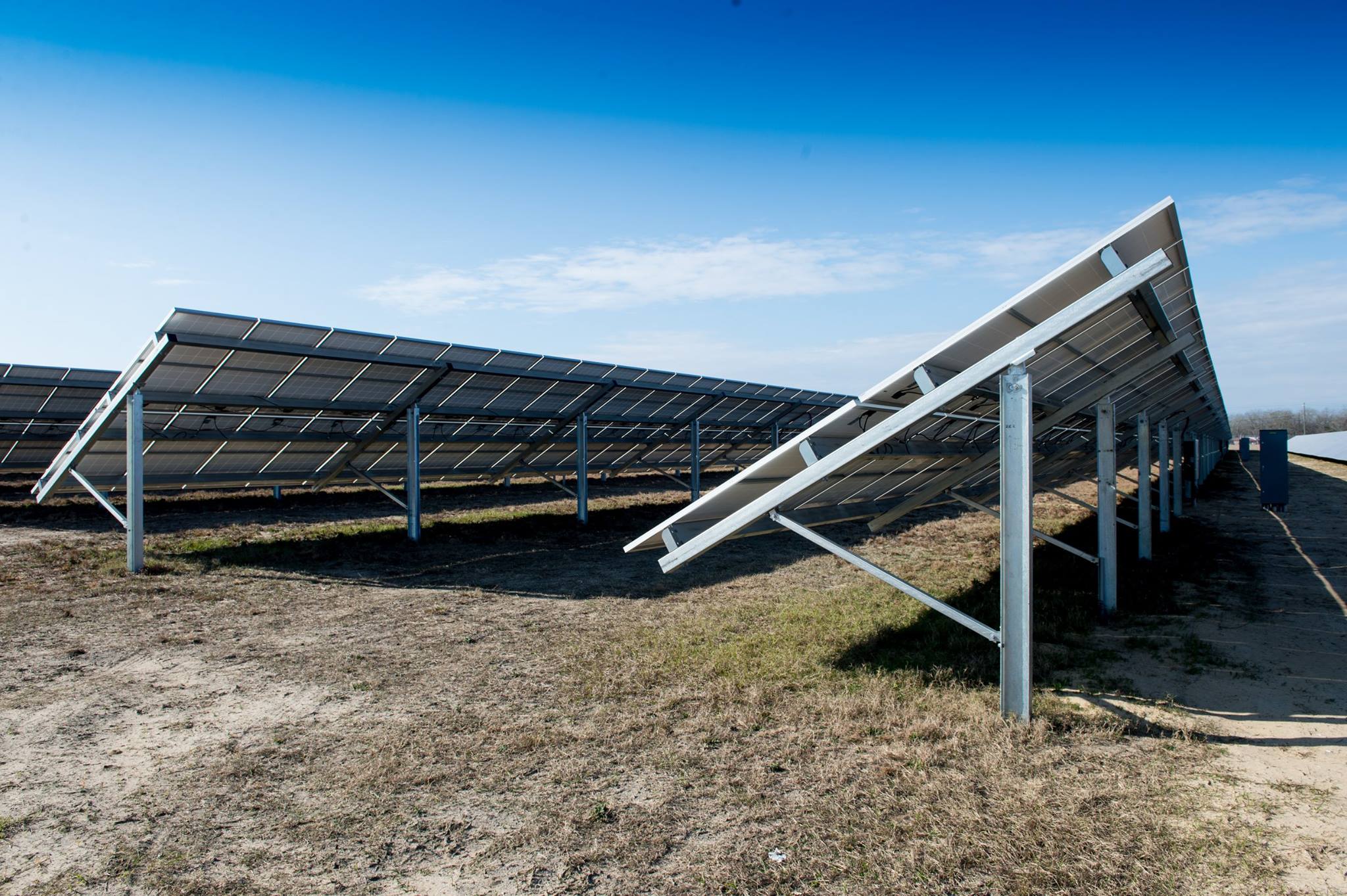
JS1One of my favorite riding songs is a little gem called “Shine Like the Sun” by Matt Maher. With an open-ended feel, a lightly-layered lead guitar, and a resounding old-school classic rock riff, it’s the perfect soundtrack for rolling down your windows and hitting the road. Although the song doesn’t talk about alternative energy or cost-savings, as of December 16th, the title is one the citizens of Evans County can rally behind. That’s because, thanks to the Economic Development Authority of Claxton-Evans County, the Cantsink Solar Farm has come to our area.

The six-acre home for Evans County’s newest resident is located in the Claxton-Evans County Industrial Park and boasts more than 3,000 solar panels. Designed to generate more than 1,500 megawatt hours of electricity per year, the solar farm has the ability to power as many as 121 homes and has the capacity to generate $15,000 or more in annual tax revenue for the county. To top it all off, it serves as a long-term guaranteed revenue stream due to a 20-year agreement with Georgia Power. All in all, Cantsink’s presence is a sustainable win for our county. The project is part of a solar power purchasing initiative headed by Georgia Power, whose goal is to stimulate economic growth within the solar energy sector. In other words, the Georgia Power Advanced Solar Initiative (GPASI) helps solar farms make money by agreeing to buy energy that solar farms create and put up for sale. It also serves as an incentive for investing in alternative, clean, green, renewable energy.

Energy is a necessity, but, as time goes on, getting and generating it is becoming more and more of a necessary evil. The basic premise is that fuel costs us something to acquire and use. Oil, shale, coal, and other combustible forms of fuel are limited. We’re tied to the natural reserves that exist either here or in other countries. Trade agreements, politics, war…we see the influence of these every time we pull our car up to the pump for a fill up. If relations are good, gas prices are good. If politics are suddenly shaky, our pumps and pockets pay the price. Throw in a communist dictator, a controversial movie reference, a bare-chested bear rider, terroristic sympathies, or any of many conflicts in the Middle East and acquiring energy suddenly gets more complicated, not to mention the environmental impact of burning fuel and the resulting pollution.

Even though it’s electricity that we’re discussing, the same principle applies: Electricity costs money to generate and it costs us something to use. However, imagine off-setting that cost by using a source that naturally occurs. Imagine not having to generate energy because nature generates it for us. That’s the premise of solar energy. We can harness the natural power of the sun and use it to help power our businesses and our homes. Not only can we harness this technology, not only can we minimize the environmental impact, not only can we both save our citizens money and generate income from outside sources, but by working hard and putting this renewable energy station into place, we send a message to outside businesses and potential investors that our community is looking toward the future with the goal and intent of making Evans County shine like the sun. This recent development in our area is about more than just solar panels and green energy; it’s about stewardship, pride, and integrity…the very things that have the potential to make our area, and the people in it, to shine!

Learn More…
To learn more about the Economic Development Authority and the Cantsink Solar Farm, visit and like the EDA’s Facebook page. While you’re on Facebook, “like” our page as well. Photo courtesy of Dr. Curt Hames and Curt Hames Photography